
Learn about the CHS Visiting Researchers in Nafplio 2025
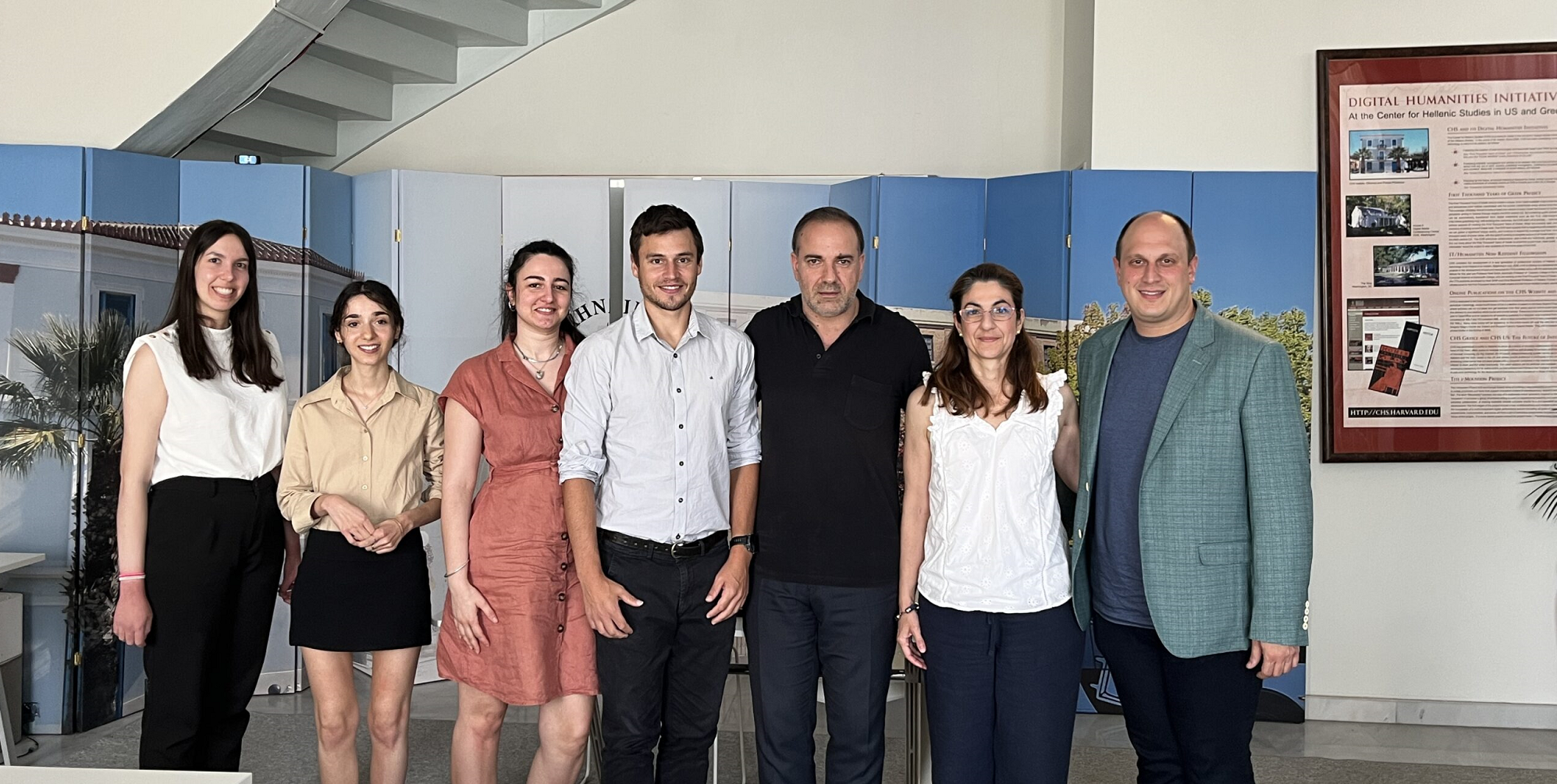
With a commitment to fostering the next generation of scholars in Greece and promoting interdisciplinary exchange, CHS Greece successfully completed the 2025 “Visiting Researchers in Nafplio” program. Now in its third year, the initiative welcomed participants from Greek universities for two intensive residencies (June 1-7 and August 31-September 6, 2025) at the CHS facilities in Nafplio.
This year’s program centered on the field of Bioethics, inviting researchers to explore the ethical, societal, and philosophical dimensions of biotechnology and artificial intelligence (AI). Participants benefited from access to the Harvard University digital library and engaged in constructive dialogue with academic advisors and peers. Special emphasis was given to projects at the intersection of Genetics and AI, while diverse interdisciplinary perspectives were actively encouraged.
During their residencies in Nafplio, the researchers presented their projects and took part in feedback sessions, roundtable discussions, and the dynamic scholarly community at CHS Greece. These experiences advanced both their research and professional development.
The following profiles introduce the 2025 visiting researchers and highlight their work on some of today’s most pressing bioethical questions.
Anastasia Drikakis

About her research visit
Project: “From Brain to AI: Conscious Emergence in Self-organising Systems”
During the CHS Greece residency in Nafplio, I worked on my project, “From Brain to AI: Conscious Emergence in Self-Organising Systems”, which develops minimal conditions for consciousness grounded in homeostatic regulation and predictive dynamics, and articulates principled thresholds for attributing consciousness and responsibility to artificial agents. The program’s library orientation and access, combined with advisor consultations and roundtable discussions, allowed me to refine core definitions, tighten comparisons among leading theories of consciousness, and outline empirical tests linking active-inference models to bioethical evaluation. The collaborative setting with fellow researchers fostered rigorous yet constructive dialogue, helping me convert theoretical commitments into a clear research plan and draft sections suitable for publication. Overall, the Nafplio experience was intellectually focused, collegial, and generative, and it advanced both the conceptual architecture and the practical deliverables of my PhD work.
A few words about Anastasia Drikakis
Anastasia Drikakis is a PhD candidate in philosophy and bioethics at the University of Crete, where her doctoral studies focus on artificial consciousness and agency at the interface of philosophy of mind, cognitive neuroscience, and artificial intelligence (AI). Her research interests include the free-energy principle and predictive processing, Markov blankets and self-organisation, ethical criteria for ascribing agency, and the implications of these frameworks for AI systems—especially in health-related contexts.
Aikaterini Fyka

About her research visit
Project: “Bioethical Considerations in Preclinical MASLD Research: The Role of Mouse Models”
Being part of the “Visiting Researchers in Nafplio” program 2025 has been a deeply rewarding and inspiring experience. Access to Harvard University’s digital library provided an exceptional range of resources that greatly enriched my doctoral work and opened new pathways for exploration. Equally important, the program’s interdisciplinary environment—shaped by collaboration with fellow PhD candidates and the advising academic committee—broadened my perspectives and offered valuable opportunities for intellectual exchange. Daily discussions with researchers from diverse fields encouraged me to view my project through new lenses, fostering creativity and strengthening both my academic and personal horizons. As part of my residency, I explored the bioethical considerations of preclinical research on metabolic liver diseases, reflecting on how innovative and less invasive approaches could shape the future of biomedical research. Beyond the research itself, I deeply valued the welcoming and supportive atmosphere of the CHS Greece, which fostered meaningful connections, inspired critical reflection, and created an ideal setting for intellectual growth. This residency in Nafplio not only advanced my academic path but also offered lasting inspiration and a strong sense of scholarly community.
A few words about Aikaterini Fyka
Katerina (Aikaterini) Fyka is a biologist who graduated from the Aristotle University of Thessaloniki and holds a Master’s degree in the molecular basis of human diseases from the University of Crete. During her undergraduate studies, she investigated the role of cellular senescence mechanisms in lymphomas through proteomic and bioinformatic analysis, while her postgraduate research focused on immunological and genetic markers in obesity and aging. Currently, she is pursuing a PhD at the School of Medicine of the National and Kapodistrian University of Athens, where her dissertation, entitled “Innovative Approaches in the Prevention and Treatment of Hepatic Steatosis and Hepatocellular Carcinoma,” investigates the therapeutic potential of natural drug products in preclinical models. Alongside her doctoral work, she has contributed to research projects on immune damage mechanisms in severe pneumonia and on novel compounds for the treatment of ovarian cancer. Her broader academic interests span biology, medicine, pharmacognosy, disease therapy, and bioethics, and she is particularly motivated by the interdisciplinary intersections between health sciences, ethics, and public health challenges.
Polykarpos Gkasiavelis

About his research visit
Project: “Ethical Issues Related to the Implementation of AI in Healthcare”
My participation in the program “Visiting Researchers in Nafplio” was a unique experience that will stand as a milestone in my academic journey. Both the academic committee and the rest of the staff at the CHS Greece supported us throughout the program, always willing to assist us in conducting our research and to answer any questions we had. The Center’s digital library provided me with a rich and up-to-date bibliography, which contributed greatly to the completion of my research, entitled “Ethical Issues Related to the Implementation of AI in Healthcare.” My research focused on the violation of the four fundamental principles of bioethics (autonomy, beneficence, non-maleficence, justice) that may arise from the use of artificial intelligence (AI) in the field of health, as well as on the changes that AI may bring to the relationship between healthcare professionals and patients. In addition, I feel fortunate to have met four other PhD candidates with whom I share similar research interests. Through collaboration and constructive discussions, we developed a strong bond that I am certain will continue even after the completion of the program. Finally, I would like to warmly thank CHS Greece and Harvard University for these unique two weeks, with the hope that our collaboration will continue in the future.
A few words about Polykarpos Gkasiavelis
Polykarpos Gkasiavelis is a dentist and an officer of the Hellenic Air Force. He graduated from the Department of Dentistry of Aristotle University of Thessaloniki in 2012. In 2021, he successfully completed the Master’s program “Ethics and Deontology in Biomedical Sciences” at the Department of Medicine of the University of Thessaly, and in 2025, the Master’s program “Prevention and Control of Clinically Significant Infections in Healthcare Units” at the same University. Since 2023, he has been a PhD candidate at the Department of Nursing of the University of Thessaly. The title of his dissertation is: “The Education of Greek Healthcare Professionals in Bioethics and Deontology.” His research focuses on ethical and deontological issues in the field of healthcare, as well as on the use of artificial intelligence in the provision of healthcare.
Nikos Kolisis

About his research visit
Project: “Gene Editing of Human Embryos and Disability Rights: A Contractualist Approach”
During my visit to the CHS Greece in Nafplio, I focused on the subject of the moral permissibility of human genetic engineering, particularly for the treatment of genetic diseases. Therapeutic uses of gene editing are generally considered acceptable by scientists, theorists, and much of the public, and some experimental treatments have already been licensed and successfully implemented in certain jurisdictions. Nevertheless, genetic therapy remains a controversial issue, especially within the disability community, where many argue that some of the ideas driving such projects carry eugenic implications.
My primary goal was to organize suggested arguments and critiques in order to develop and present my own perspective in the relevant chapter of my thesis. Having access to Harvard University’s digital library, therefore, has been invaluable: I was able to consult the latest publications on gene editing in human and animal cells, download articles addressing disability rights and the concepts of cure and disease from journals of philosophy and bioethics, and examine laws and policies from different countries concerning the treatment of persons with disabilities.
Beyond research and writing, I was very lucky to meet and collaborate with other PhD candidates from diverse academic backgrounds. They were not only highly knowledgeable but also interesting, approachable, and supportive; they made my weeks in Nafplio both intellectually enriching and enjoyable. Through our discussions, I received constructive feedback, was exposed to perspectives I had not previously considered, and incorporated some of their comments into my writings. Since our projects were all related to bioethics, we could engage deeply with one another’s arguments. For me personally, this experience was especially beneficial, as it required me to be concise and thorough in order to respond to the questions and critiques from both fellow PhDs and the advising academic committee, who were kind enough to offer comments and suggestions after my presentation. Finally, I would like to thank the Center’s staff for organizing our stay and for their constant support throughout the fellowship. Their planning made the entire experience smooth and enjoyable.
A few words about Nikos Kolisis
Nikos Kolisis is a PhD candidate in philosophy of law at the Faculty of Law of the National and Kapodistrian University of Athens. His dissertation focuses on issues of Ethics and Justice arising from the application of genetic engineering technologies to humans. He has completed his postgraduate studies in political thought and intellectual history, as well as in philosophy of law, at the University of Athens and the University of Cambridge. He has published articles and participated in conferences and workshops on topics related to bioethics, ethics, and political philosophy.
Kornilia Papanastasiou

About her research visit
Project: “Bioethical Challenges in Integrating AI in Assisted Reproductive Technologies (ART)”
During my residency as a visiting researcher at the CHS Greece, I pursued the project “Bioethical Challenges in Integrating AI in Assisted Reproductive Technologies (ART).” The program provided valuable access to Harvard’s digital library, which was exceptionally comprehensive and up-to-date, enabling the exploration of critical scholarly works and the latest publications. The uninterrupted research time in Nafplio allowed me to deepen the conceptual foundation of my dissertation and advance parts of its writing. Beyond the research itself, the experience in Nafplio was enriched by the people involved in the program—staff, organizers, advisors, and fellow PhD candidates. The environment fostered interdisciplinary reflection and exchange. Overall, the program offered not only the resources and space necessary for advanced research but also an invaluable network of colleagues and mentors.
A few words about Kornilia Papanastasiou
Kornilia Papanastasiou is a PhD candidate in the Department of History and Philosophy of Science at the National and Kapodistrian University of Athens, Greece. Her dissertation research, titled “Contextualizing the Integration of AI and Big Data into Reproductive Technologies,” which was supported by a three-year fellowship from the Hellenic Foundation for Research & Innovation, employs ideas and methods from the fields of history and philosophy of science, science and technology studies (STS), and gender studies. She has presented parts of her research in numerous international conferences and summer and winter schools, contributing to discussions on science, technology, and society. Her dissertation focuses on the interdisciplinary analysis of the integration of artificial intelligence (AI) and big data into assisted reproductive technologies (ART), exploring how these technologies are designed, developed, and embedded into reproductive contexts through the lens of the humanities and social sciences. This integration is evident in the development and use of AI algorithms for assessing embryo quality, selecting embryos, predicting their viability, and facilitating implantation. While the potential of AI technologies to improve the success rates of in vitro fertilization (IVF) is significant, her research emphasizes that technologies are never neutral, but instead embed biases, reinforce social structures, and raise profound ethical questions. In this framework, her project also addresses issues of transparency, explainability, and the opaqueness of the “black box” that emerges at the intersection of AI and ART.