AI Ethics at CHS: Reflections from Giannis Perperidis, Fellow in AI Ethics 2025–2026
The Center for Hellenic Studies is pleased to highlight the work of Giannis Perperidis, Fellow in AI Ethics 2025–2026. During his fellowship, which started on July 1, 2025, and will conclude on June 30, 2026, Giannis advanced his research on the concept of "openness" in artificial intelligence, resulting in multiple publications, international presentations, and new collaborations across institutions. In the guest post below, he reflects on his research and his experience as a CHS fellow.

The AI Ethics Fellowship at CHS was a unique experience, both academically and personally — one that strengthened my research skills, supported the development of my work, and provided the necessary resources to communicate and present my ideas.
Guest post by Giannis Perperidis
The AI Ethics Fellowship at CHS was a unique experience, both academically and personally — one that strengthened my research skills, supported the development of my work, and provided the necessary resources to communicate and present my ideas.
My name is Giannis Perperidis, and I was the AI Ethics Research Fellow at CHS for the 2025–2026 period. My approach to AI ethics does not begin from ethics per se, but from a broader philosophy of technology — one that focuses on the socio-political nature of technological systems and explores the philosophical, ethical, and political principles that shape artificial intelligence today.
In my research, I focus on the concept of openness. I explore whether AI — as a field, not just as a set of applications — can become more open. This question led me beyond the technical understanding of "open source" toward a broader investigation of openness across different domains of life: ontological, socio-political, and technical. My work suggests that meaningful openness in AI requires engagement across all three domains. In the ontological domain, I draw on the work of Henri Bergson; in the socio-political domain, on the field of the commons; and in the technical domain, on thinkers such as Andrew Feenberg, as well as constructivist approaches in Science and Technology Studies (STS) and open-source practices. Bringing these perspectives together, I argue that socio-technical spheres should not be treated as separate, but as processes that co-emerge and co-shape one another. From this perspective, ethics is not simply a matter of regulation or a set of guidelines for responsible use. Rather, it becomes a way of opening up new possibilities — for both society and technology — starting from one of the most influential emerging fields today: Artificial Intelligence. In this sense, my work approaches ethics through the lens of philosophy of technology, particularly within the tradition of critical theory.
The CHS fellowship supported this project in multiple ways. It provided access to essential literature and resources that allowed me to complete key outputs, including a book in Greek, Η Τεχνητή «Νοημοσύνη» ενώπιον του εαυτού της: Επανεξέταση της σχέσης ανθρώπου‑φύσης‑τεχνολογίας (Artificial "Intelligence" Before Itself: Rethinking the Human–Nature–Technology Relationship)(Topos Books, 2025), as well as two academic publications — one in an international peer-reviewed journal, "Imagining techno-political alternatives: the (digital) commons as a response to tech oligarchies," and another in an upcoming edited volume on AI and democracy. At the same time, it gave me the opportunity to present my work to international audiences.
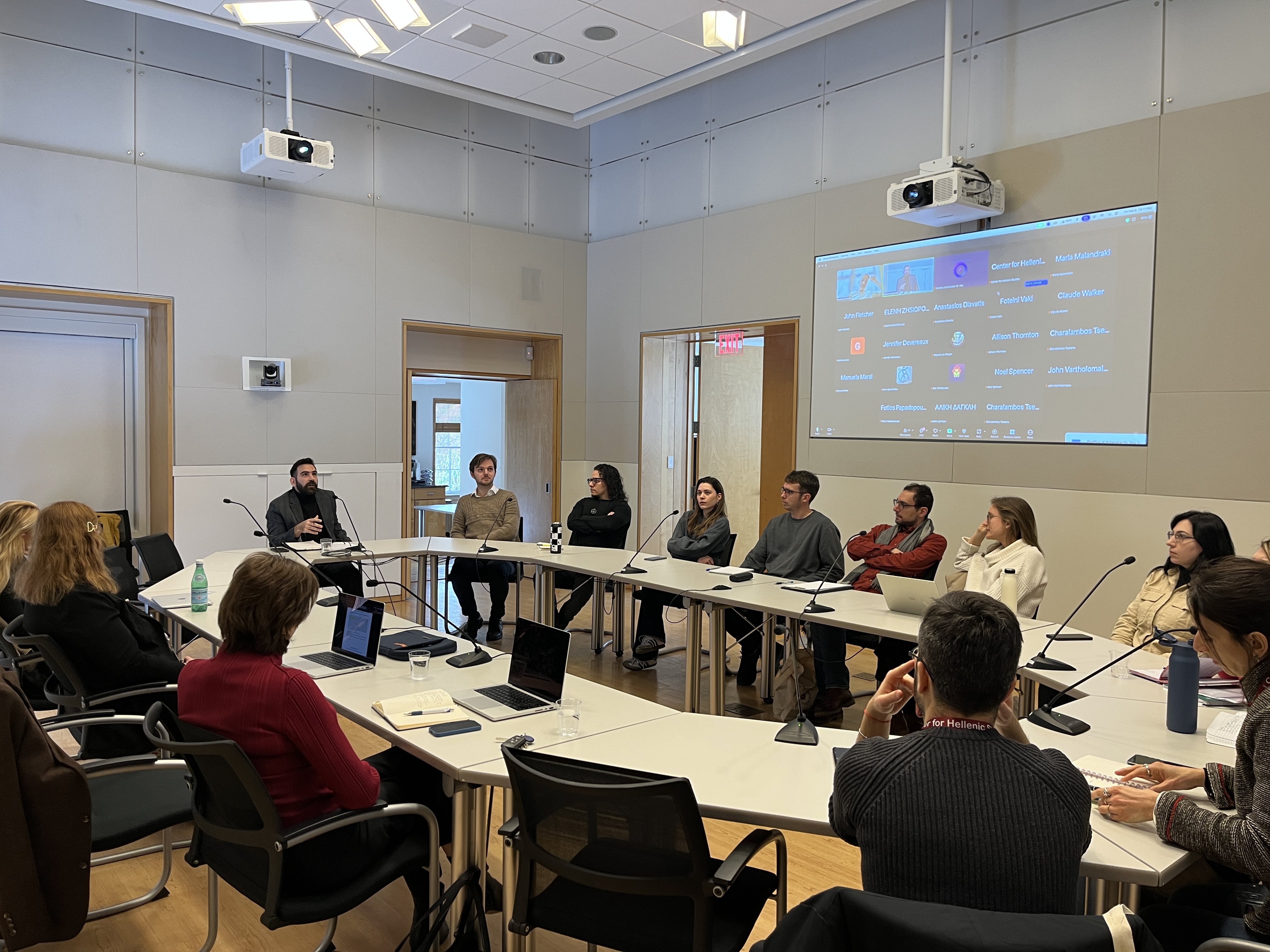
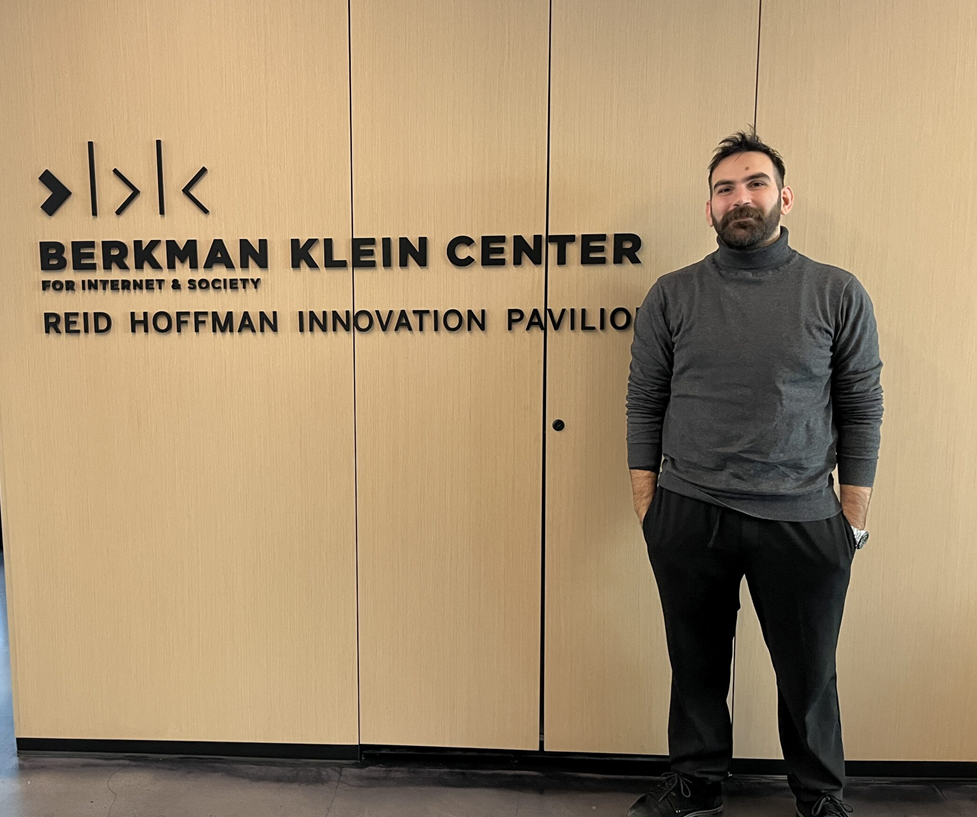
Equally important were the connections and collaborations that emerged during the fellowship. Through CHS, I was introduced to the Berkman Klein Center for Internet & Society, to the Dumbarton Oaks community, and to Georgetown University, became involved in The Lyceum Project — including the opportunity to host the Young Scholars' Session this year — and, perhaps most importantly, engaged with a diverse group of fellows working across different fields. These interactions broadened my perspective and deepened my understanding of how research is conducted in other disciplines.
In addition to its academic dimension, the CHS Fellowship also offered meaningful personal experiences. The visit to the campus in the United States was truly memorable. The organization and care behind the program were evident in every detail, and I would especially like to thank Evan for making this experience so smooth and welcoming. The activities organized in both Boston and Washington, D.C., were engaging and thoughtfully curated, offering valuable opportunities for exchange and reflection. Staying at the CHS campus in Washington, D.C. was, in itself, a unique experience — one that allowed me to immerse myself fully in the environment for ten days. The CHS library is an inspiring space for study and research, and the overall atmosphere of the campus made a lasting impression on me. Also, the meals at the campus were truly exceptional!
I feel both glad and honoured to have been part of CHS. The fellowship opened up a network of opportunities that will shape both my current work and future plans. Given the chance, I would gladly take part in this experience again.
I would like to sincerely thank CHS and its entire staff for their support and for offering me the opportunity to be part of such a stimulating and collaborative environment.